
I recently received a question from a new reader about how to systematically learn COSMIC Functional Size Measurement.
For someone without a technical background who is transitioning into a COSMIC review role, the most important thing to learn first is not COSMIC Functional Size Measurement itself, but how to understand software requirements.
Most COSMIC review activities are based on software requirements specifications. Before learning COSMIC in depth, it is important to become familiar with how your organization or project teams write requirements—their formats, content, methods, and conventions.
This understanding can be developed by reading requirements documents, participating in project reviews, attending project meetings, and becoming familiar with the business domain.
Start with the COSMIC Measurement Manual
Once you have a basic understanding of the business and its software requirements, you can begin learning COSMIC Functional Size Measurement.
The COSMIC Measurement Manual Version 5.0 consists of three parts:
Part 1 — Principles, Definitions & Rules
Part 2 — Guidelines
Part 3 — Examples
A practical approach is to first read Part 1 to become familiar with the fundamental concepts.
When you encounter a concept that is difficult to understand, you can refer to the corresponding section in Part 2 for more detailed guidance.
Finally, Part 3 provides examples that can help you understand how COSMIC is applied in actual measurement activities.
The concepts required for COSMIC measurement can be found in the Measurement Manual. However, theoretical knowledge alone is not sufficient. A significant amount of practical exercise is also necessary.
Understand the Overall COSMIC Measurement Framework
Before beginning practical measurement exercises, it is useful to first build an overall framework and understand the logic of the COSMIC measurement process.
The COSMIC measurement process consists of three phases:
Measurement Strategy → Mapping → Measurement
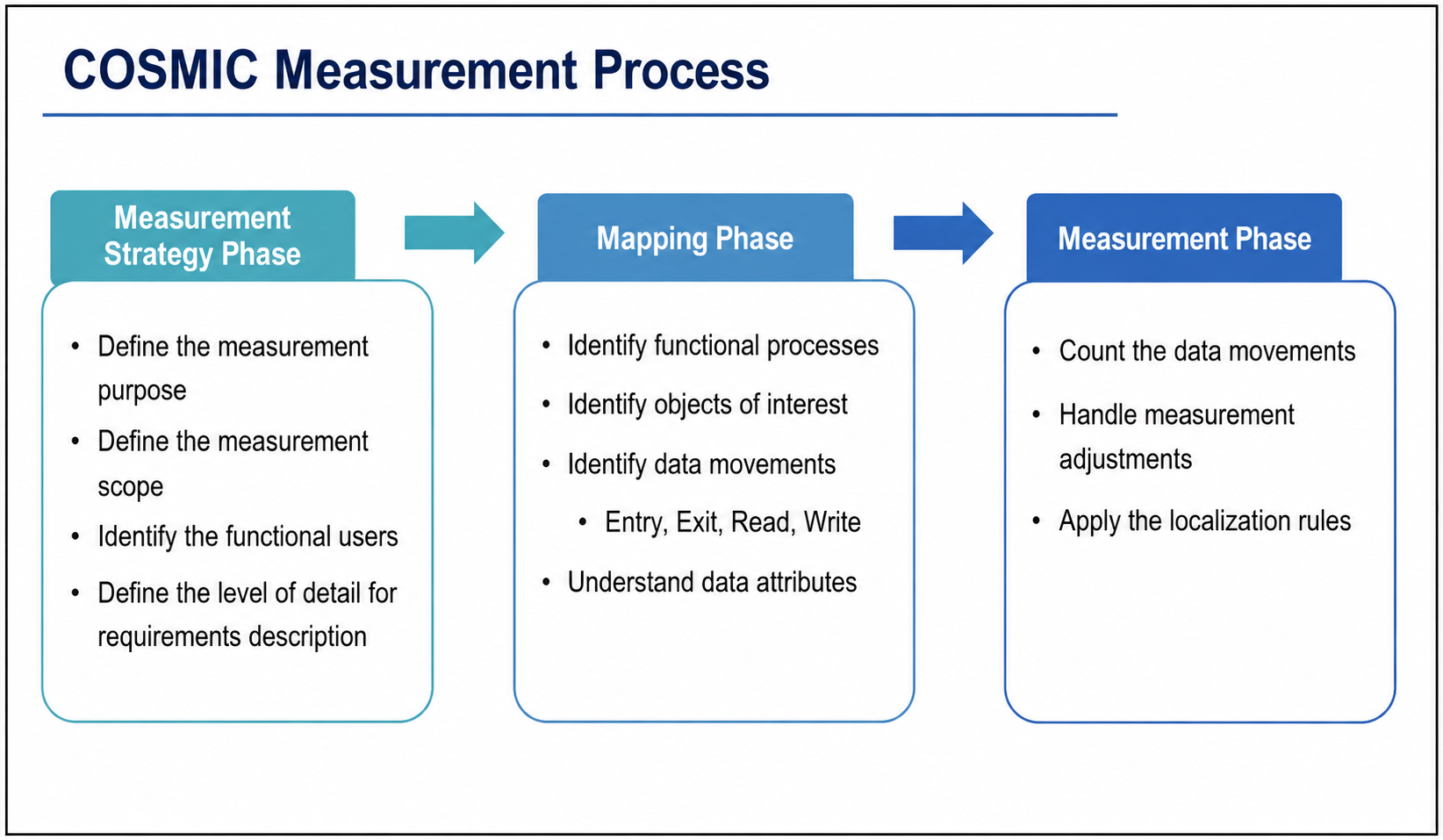
The Measurement Strategy phase is a preparation phase. It is more oriented toward defining, at the organizational level, how COSMIC will be used.
Once the organization has determined the purpose of measurement, it can establish the corresponding measurement process and measurement templates. Requirements for the documents to be measured can also be clearly defined.
Measurement personnel—who may be requirements analysts or other people designated by the organization—can then proceed to the second phase.
Mapping Requirements to COSMIC Concepts
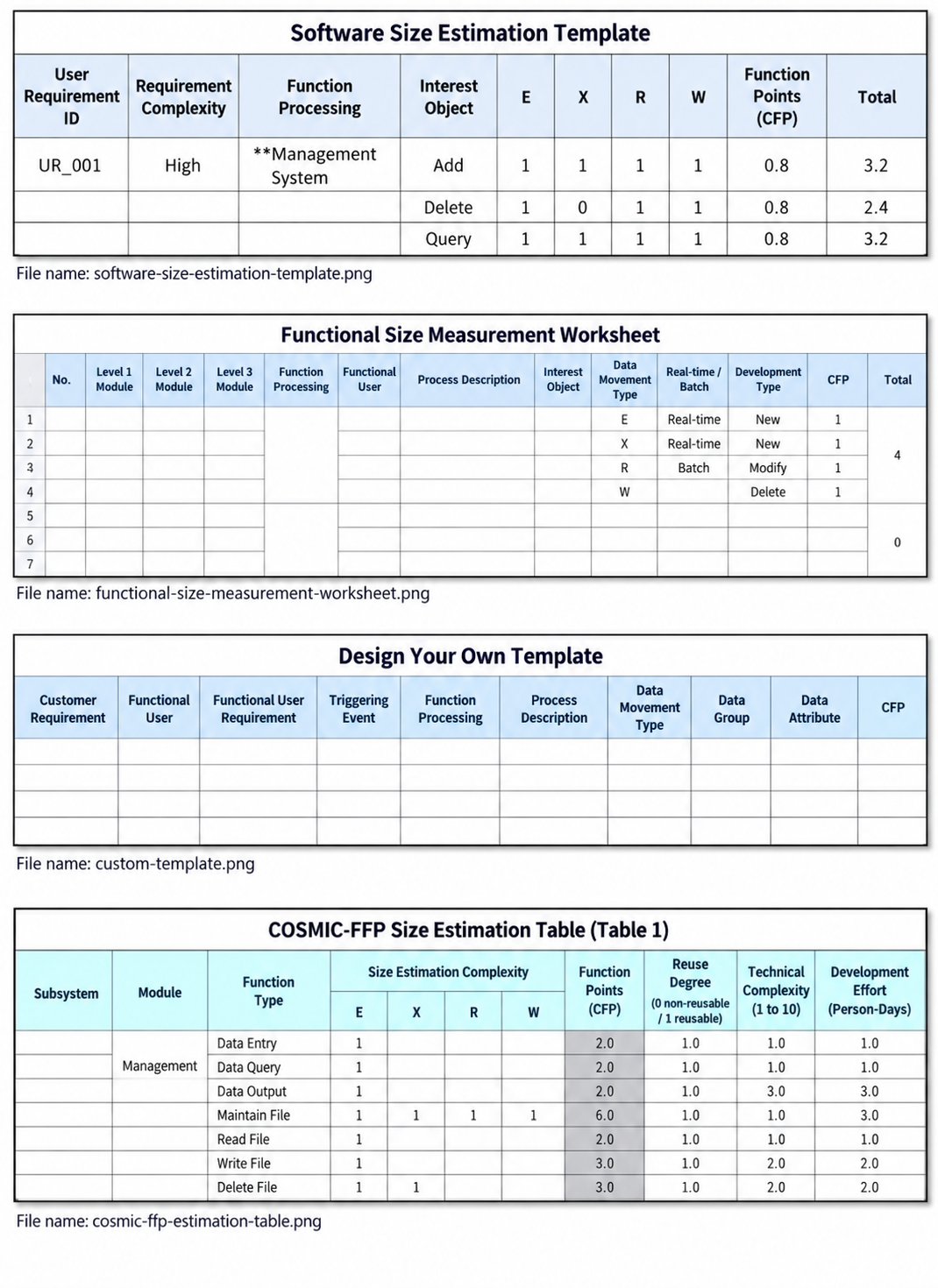
The Mapping phase primarily involves mapping the documents to be measured to COSMIC concepts and completing the measurement template according to organizational requirements.
The final measurement results are also recorded in the template, leading to completion of the third phase—the Measurement phase.
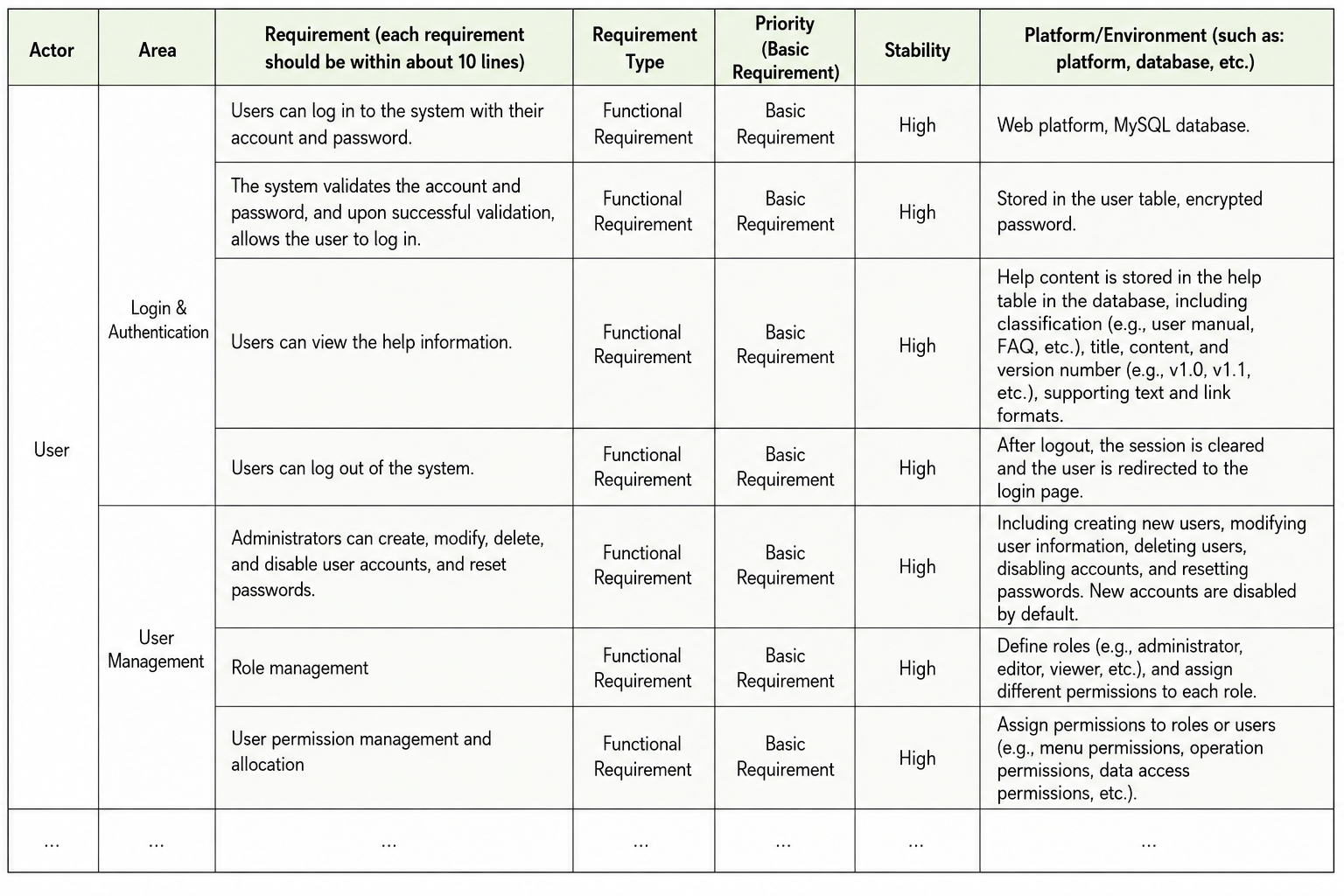
Below are several examples of measurement templates designed by participants in online COSMIC courses.
Decompose Requirements Before Measurement
Before mapping COSMIC concepts, an important step is to decompose the document to be measured into different levels.
A requirements document may contain multiple functional processes, and each functional process may contain multiple data movements.
The design of the measurement template should reflect this hierarchical structure.
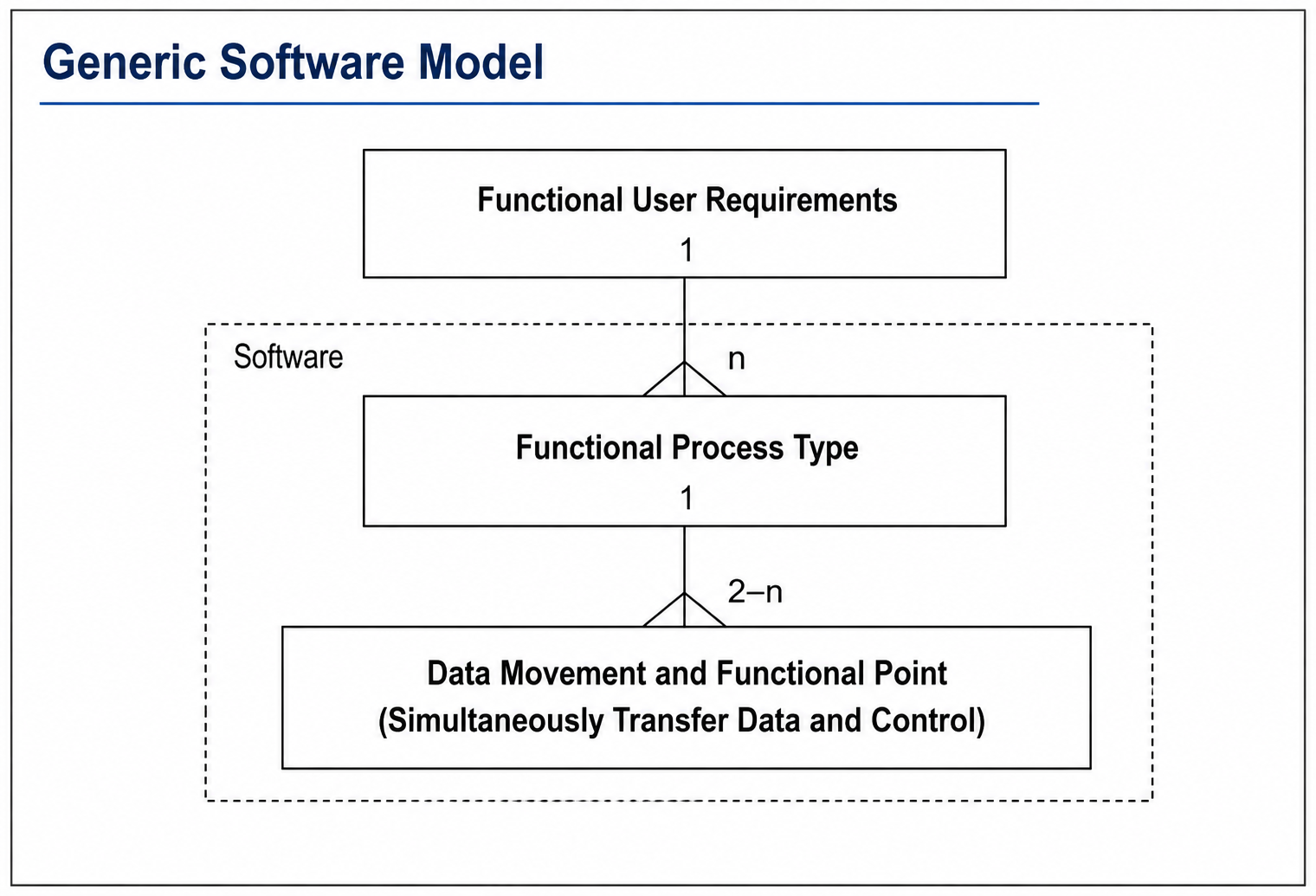
The document to be measured should therefore be decomposed according to the definition of a functional process so that individual functional processes can be identified.
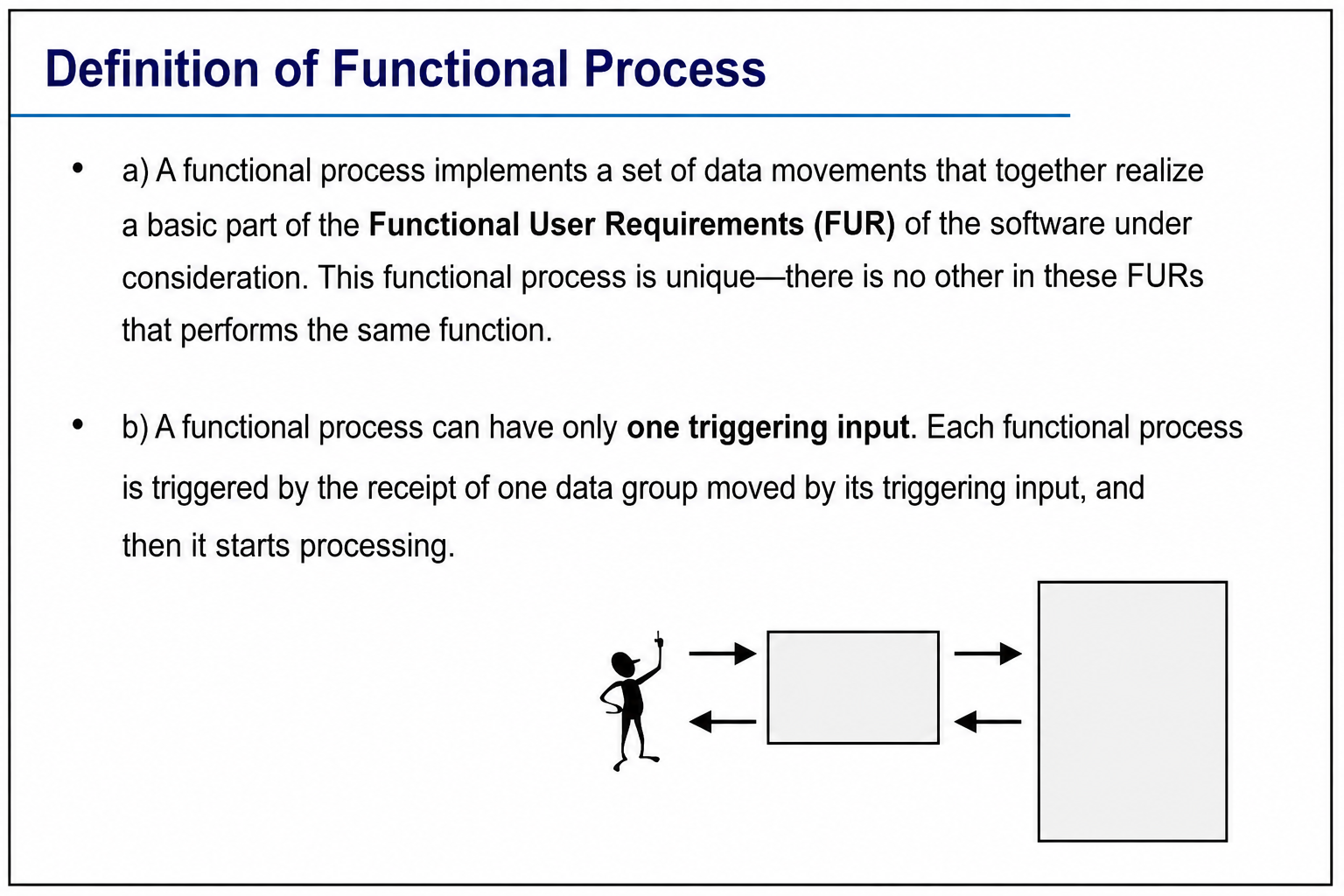
Some requirements are clearly written and functional processes can be identified relatively easily.
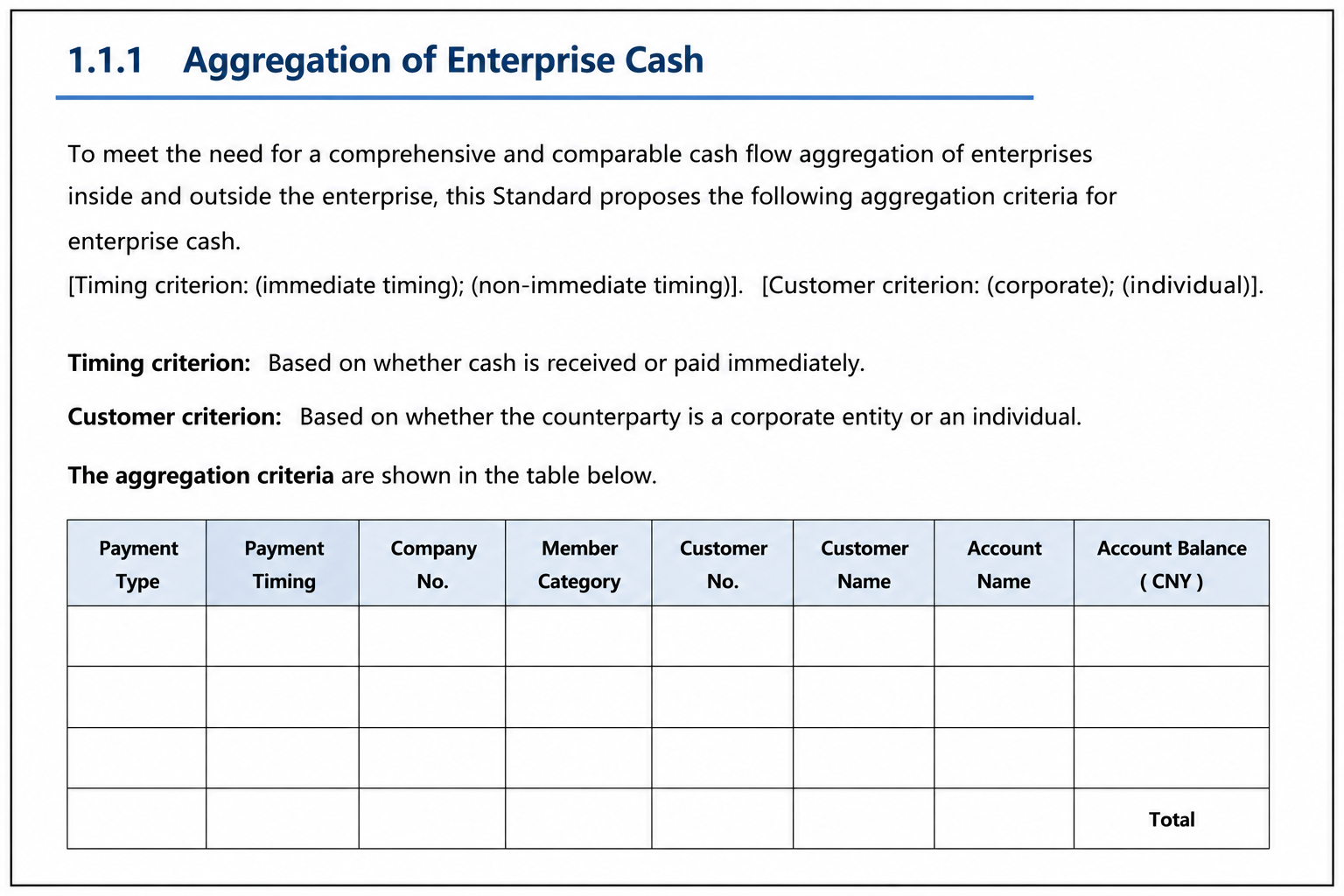
Other requirements may be ambiguous. In such cases, communication with the person who wrote the requirements may be necessary to confirm whether a functional process actually exists.
Connect COSMIC Concepts with Concrete Examples
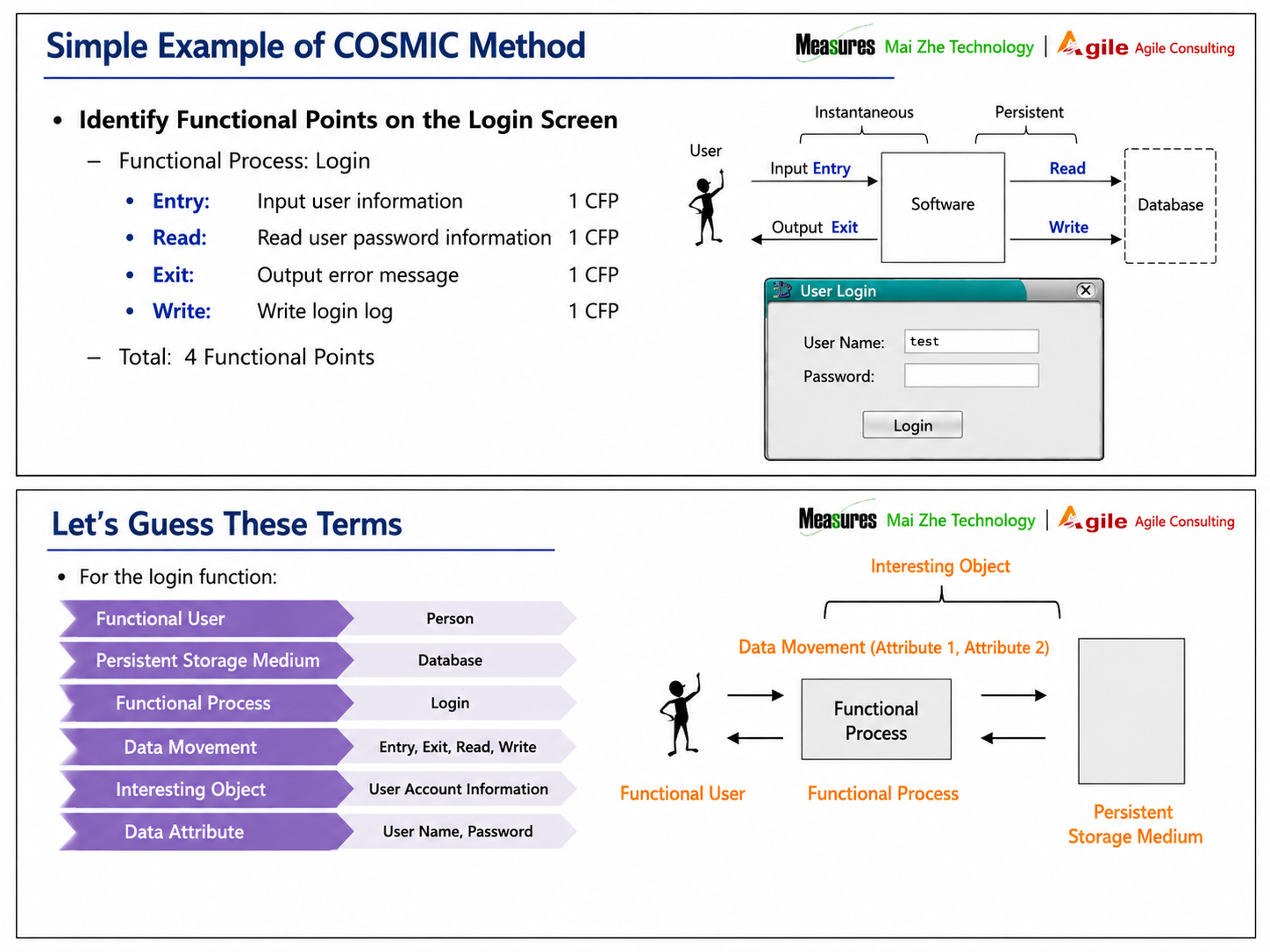
Once the requirements have been decomposed into functional processes, the data movements within each functional process can be measured.
Simply memorizing COSMIC terminology can be difficult because many of the concepts are abstract.
A more effective approach is to connect each concept with a concrete example.
If you can understand how the COSMIC concepts correspond to the elements in a specific example, the same measurement logic can then be extended to other scenarios.
Practice Repeatedly
Becoming proficient in COSMIC requires repeated practice in two fundamental activities: decomposing requirements and identifying functional size.
The more requirements you analyze and the more frequently you apply the COSMIC rules, the more familiar you become with the method.
In addition to practicing independently with requirements documents, learners can also participate in free online classes, structured courses, and practical training.
COSMIC certification examinations can also be used to evaluate and validate learning outcomes.
Conclusion
To become proficient in COSMIC Functional Size Measurement, you should first develop a general understanding of its theoretical foundations. This can be achieved through self-study or structured courses.
More importantly, you should understand the overall measurement framework and the logic connecting the different measurement activities, rather than simply memorizing individual terms and rules.
Once the basic framework is understood, practical exercises can be used to reinforce the concepts and rules.
Through repeated practice, reflection, and experience, measurement accuracy and efficiency can gradually improve.
This article is adapted from an earlier Chinese article written by the author.
What are your thoughts?